
Mazda Driver Assistance Systems Reduce Crash Claims, HLDI Finds
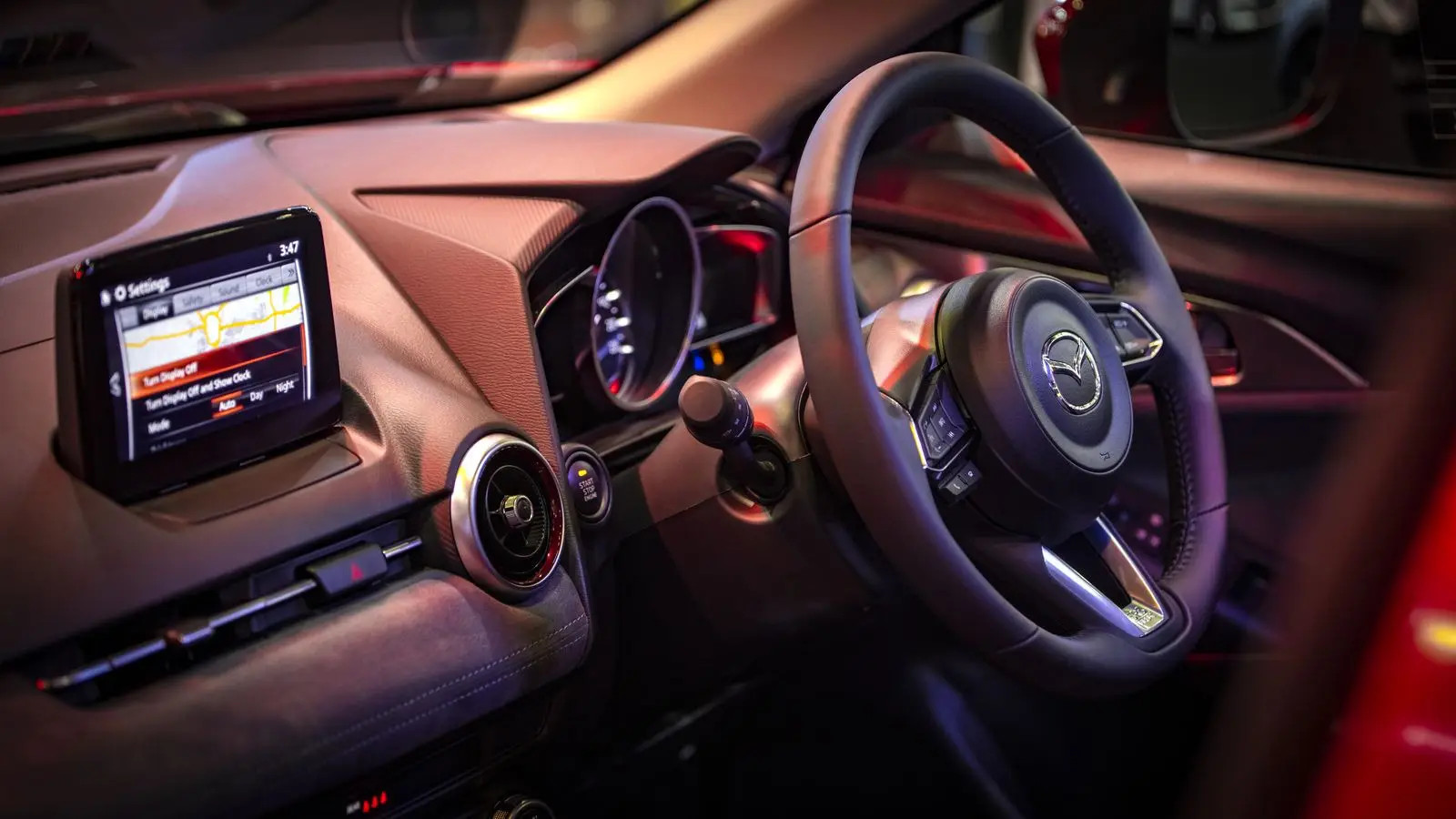
HLDI study of 2015–2023 Mazda vehicles shows advanced driver assistance systems reduce crash claims as features expand. Explore the data and findings.
Mazda’s most advanced safety bundles cut property damage liability claims by up to 39%, according to a new analysis by the Highway Loss Data Institute based on real-world insurance data from 2015–2023 vehicles.
The study examined six technology bundles alongside individual systems and found a clear pattern: the broader the set of driver assistance features, the greater the reduction in crash-related claims. A basic package combining automatic emergency braking and forward collision warning reduces claim frequency by 13% for property damage and 9% for injuries. More comprehensive configurations add adaptive cruise control, lane departure prevention, pedestrian detection, high beam assist, rear automatic braking, and driver monitoring — and deliver the strongest results.
Automatic braking technologies stand out as the most effective elements. Front AEB with pedestrian detection and rear AEB are linked to the largest reductions in crashes. Rear systems are particularly effective in low-speed parking scenarios, where a significant share of insurance claims typically occurs. Blind spot monitoring combined with rear cross-traffic alert also shows measurable impact, lowering claim frequency by about 10% for property damage and 13% for injuries.
The importance of these findings becomes clearer when placed in a broader industry context. HLDI evaluates real insurance losses rather than controlled test scenarios, comparing vehicles with and without specific systems. Across the industry, crash avoidance technologies have already demonstrated measurable effects: automatic emergency braking can reduce rear-end collisions by around 50%, while pedestrian detection systems can lower such crashes by roughly 27%.
At the same time, the data highlights limitations. The effectiveness of these systems depends on driving conditions, visibility, and system calibration. Some features, including traffic sign recognition, did not show clear benefits in this dataset — potentially due to technical constraints or a smaller number of equipped vehicles.
Another important aspect is cost. Modern safety systems rely on cameras and radar sensors that require replacement and recalibration after damage. This can increase the average cost per claim. However, nearly all Mazda bundles still result in lower overall insurance losses, as they significantly reduce the number of incidents, particularly at lower speeds.
Mazda links these results to its Proactive Safety philosophy, which focuses on supporting the driver and preventing risks before they escalate. Its i-Activsense suite integrates multiple systems using radar and camera data to continuously monitor the driving environment and assist in avoiding collisions.
The broader market is moving in the same direction. Over the past decade, the share of vehicles equipped with automatic emergency braking has grown from minimal levels to more than 90% in new models, while some driver assistance systems have become mandatory in Europe. Against this backdrop, Mazda’s results highlight not just the value of individual technologies, but the cumulative effect of combining them.
Mark Havelin
2026, Mar 27 12:33